
Honest advice before brick pavers get a coat
Brick Paver Sealing in Atlantic Beach, FL
Call (904) 685-4409 to find out whether your Atlantic Beach brick pavers need sealing.
- Brings out deeper paver color
- Fresh joint sand helps lock pavers in place
- Gives weeds less room to grow
- Makes the surface easier to keep clean
- Free estimate, no obligation
Request a Free Estimate
Free, no obligation.
Can I get brick paver sealing in Atlantic Beach, and how soon is a reply?
A local contractor seals brick pavers in Atlantic Beach, FL, and you get an answer within 1 business day, frequently sooner than that. The first visit is free, and a no is fine. To ask about your brick, call (904) 685-4409.
Brick pavers are a different animal from the concrete type, so the sealer choice matters more. A coat can deepen the red or tan, cut down on stains near a grill and keep joint sand in place. Imagine a courtyard whose herringbone looks rich again instead of dusty. Tell the contractor what your brick is made of when you request a free estimate online.
Does brick paver sealing cover my Atlantic Beach street?
The estimate area spans the whole city and the places linked below, from the older blocks near the beach to the streets that run west toward the Intracoastal Waterway, which became the city's western edge in 1996. Open a town for its own page, or call (904) 685-4409 about a street that is missing.
Do brick pavers need sealing, or is that a sales pitch?
Sometimes it is not needed. Unilock says sealing is optional and that its concrete pavers perform without it, and a clay paver dealer says hard-fired clay keeps its color in direct sun and resists stains. A coat makes sense when you want a deeper color, easier cleanup or firmer joints, not because brick will fall apart. To get a straight answer for yours, request a free estimate online.
Where a coat earns its cost is in rough spots: next to a grill, around a pool, or under trees that drop leaves. Moss and tannin stains grab porous brick. If your brick has none of that, the right answer may be a wash and fresh sand only. Ask for both options priced when you call (904) 685-4409.
How are clay brick pavers and concrete pavers different for sealing?
Clay is fired, concrete is cast, and they drink water differently. 757 Brick says fired clay colors resist UV light and that clay pavers tend to be more slip-resistant and longer lived, while concrete pavers carry color on the surface. Unilock warns that a sealer made for concrete may not suit brick. Know which you have before you ask a contractor, and say so when you request a free estimate online.
Clay brick
Fired through the body, usually in red or brown, with color that resists UV light.
Concrete brick-look pavers
Cast in a mold, with color that can fade and efflorescence that can show.
Reclaimed brick
Older, softer and more porous, so water and salt move through more easily.
Not sure
A contractor can usually tell at a glance, or from the back of a loose paver.
Which sealer belongs on brick: penetrating, wet look or matte?
Drylok describes silane and siloxane sealers as penetrating, forming a water-repelling barrier within the pores, and says high-solids glossy products darken brick. It also says wet-look sealers are solvent based and matte ones mostly water based. Penetrating types let brick keep its natural look, while gloss adds depth and shine. Compare them on a test spot when you request a free estimate online.
One caution: a sealer that does not let moisture escape can trap it, and Unilock says trapped moisture or over-application leaves a whitish film. A contractor should explain the product in plain words and show the data sheet. To ask, call (904) 685-4409.
What is the process for sealing brick pavers, and what gets checked first?
Four things come first: growth, stains, loose joints and dryness. Moss is treated and rinsed, according to Western Interlock, and white efflorescence is cleared because sealing over it holds it in place. Drylok says washed brick should dry overnight, and Unilock asks for a minimum of 24 hours, so the date has to leave room. Describe what you see when you request a free estimate online.
Growth
Moss, algae and mildew in shaded joints get treated first.
Salts
White powder is efflorescence and is cleared before sealing.
Joints
Low or empty joints get fresh sand once the surface is dry.
Dryness
Brick is left to dry overnight at least before any coat goes on.
Want your brick pavers looked at in Atlantic Beach?
Call the number below or use the short form, and a local contractor writes back within 1 business day, often sooner.
Free, no obligation
What does brick paver sealing cost in Atlantic Beach?
No page gives a rate for brick alone, so the table builds the price from clean, re-sand and seal rates for pavers in general: $1.75 to $3.25 per square foot on one Duval County company page and $1.50 to $2.50 in a guide to local sealing. A third company says its sealing starts at $1.50. Mention if your brick is old or reclaimed when you request a free estimate online.
A stripping line of $1.00 to $2.00 per square foot applies when an old film coat has failed. Penetrating products do not form a film, so they usually leave nothing to strip later. Ask which product the quote assumes when you call (904) 685-4409.
| Brick job | Size | Total at $1.50 to $2.50 | Total at $1.75 to $3.25 |
|---|---|---|---|
| Front walk and steps | 200 sq ft | $300 to $500 | $350 to $650 |
| Courtyard or small patio | 400 sq ft | $600 to $1,000 | $700 to $1,300 |
| Brick pool deck | 700 sq ft | $1,050 to $1,750 | $1,225 to $2,275 |
| Brick drive and walk | 1,100 sq ft | $1,650 to $2,750 | $1,925 to $3,575 |
Math on published paver ranges as of November 2026, sources named above. These are not brick-only rates, and your contractor sets the real price after seeing the brick.
Will sealing change how my brick looks?
It can, and the product decides how much. Drylok says glossy high-solids products darken brick, wet-look types are solvent based and matte ones mostly water based. Unilock says a sealer can deepen color or stay close to natural. If you love the faded look, say so. Ask to see a dry test spot in a corner before the job, and call (904) 685-4409 to set it up.
How does Atlantic Beach salt air and shade treat brick?
Salt arrives on the wind and settles as the air dries, and Nicolock says routine rinsing helps in coastal areas, with frequency set by distance from the shore and by storms. Atlantic Beach has roughly 3.5 square miles of land and about 73 percent water, so almost every address is near the coast or the Intracoastal. Brick near big oaks stays damp longer, and a damp joint grows moss. To plan a rinse and care schedule, request a free estimate online.
Nearby NOAA figures show about 52 inches of rain a year over roughly 122 rainy days, with August the wettest month at 7.54 inches. Brick that stays wet in August grows green faster. The mature coastal hammock at Hanna Park shows how thick the shade can get on this coast. Ask about shade when you call (904) 685-4409.
When can new brick pavers be sealed, and what temperature is needed?
New pavers wait. Unilock says to hold off 60 to 90 days, and until efflorescence is gone, which usually takes 2 to 3 months and sometimes up to a year. Drylok says to spray when air and surface temperatures are 50 degrees or higher, and Unilock gives a 50 to 90 degree window with 75 as the sweet spot. Share the install date when you request a free estimate online.
How often should brick pavers be resealed?
Film-forming coats get 3 to 5 years by Unilock's figure, and a local-area guide says penetrating ones can stretch to 5 to 7. Brick that sees sun, splash and grease sits near the early end. Do the splash test: water that beads means the coat holds, and water that darkens the brick means it is thin. To book a look, call (904) 685-4409.
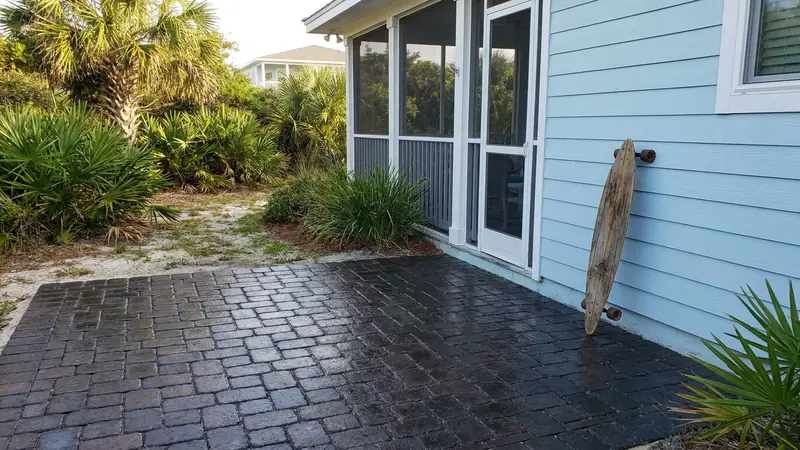
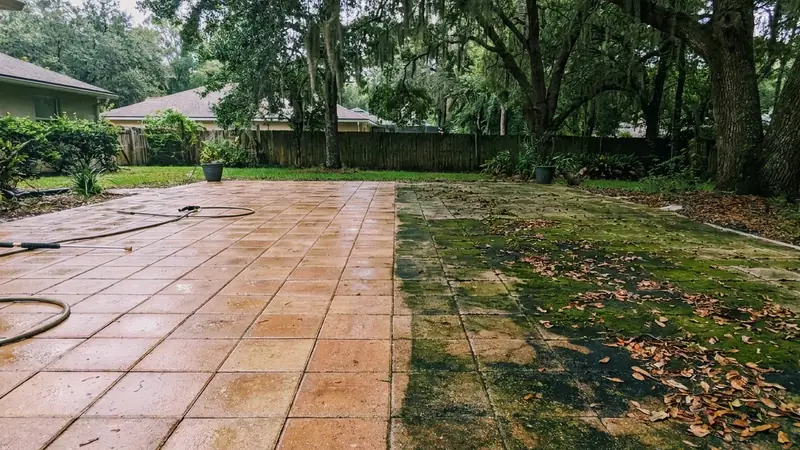
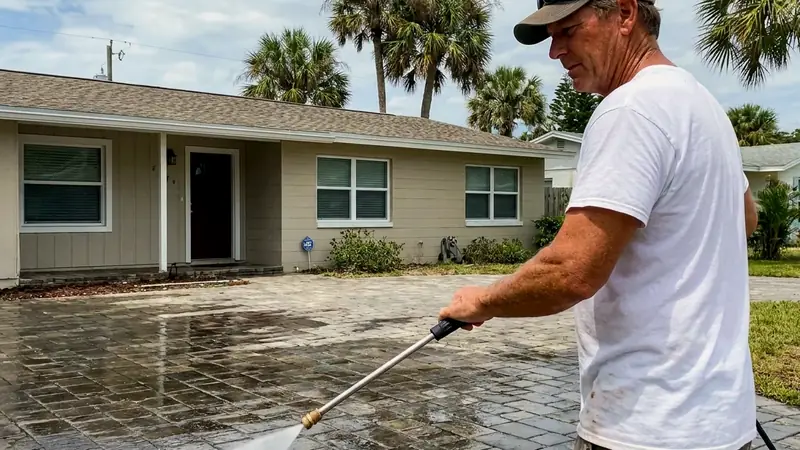
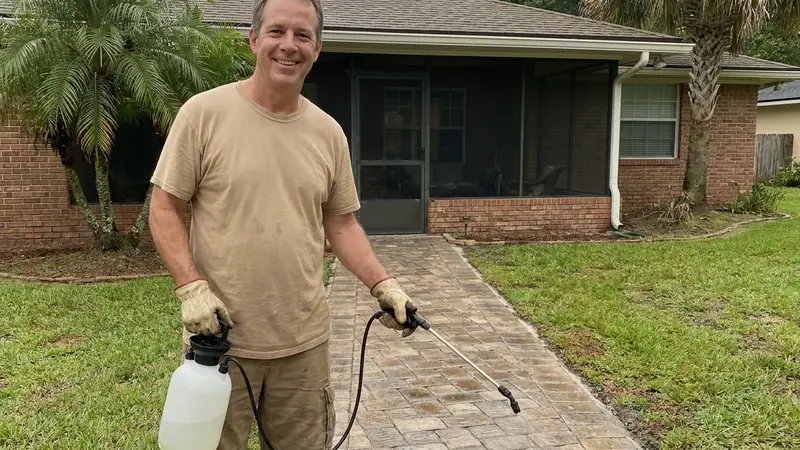
What do sealed brick and paver surfaces look like in Atlantic Beach?
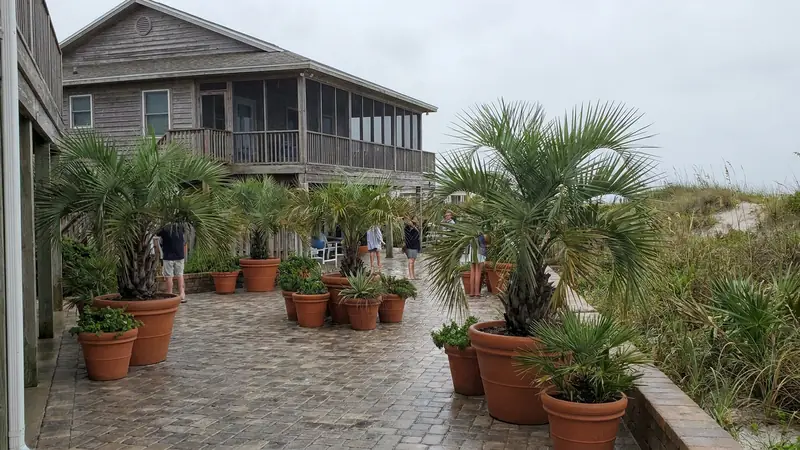
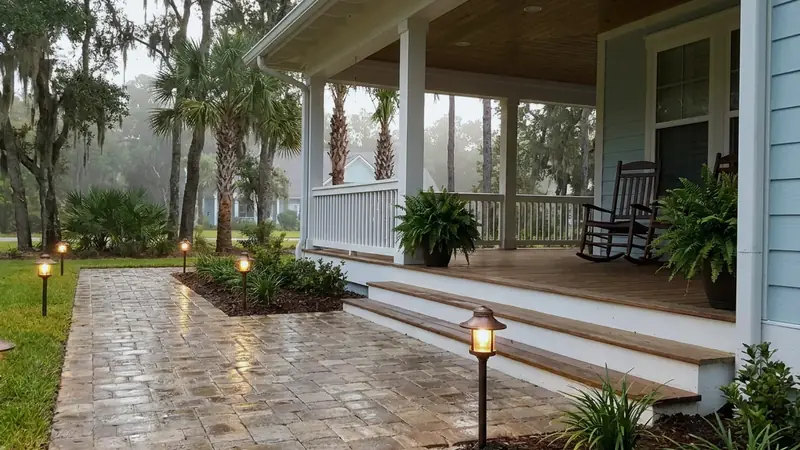
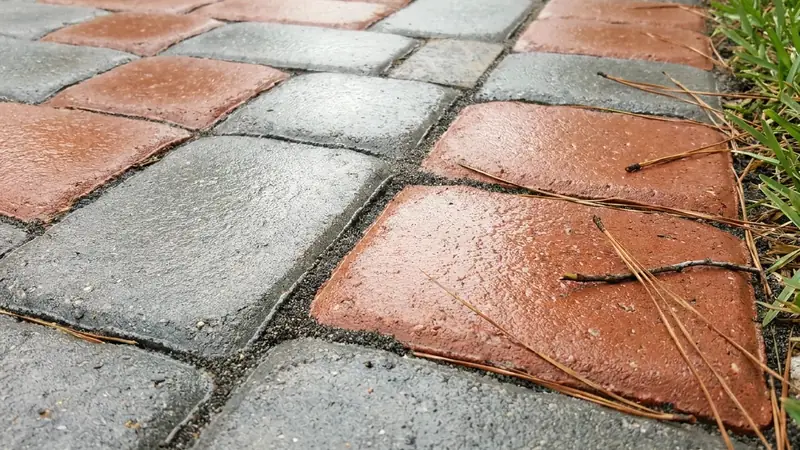
Frequently Asked Questions About Sealing Brick Pavers
Is it good to seal pavers in Florida?
For brick it depends on the brick. Clay pavers are hard-fired, and 757 Brick, a clay paver dealer, says their color resists UV light, so fading is less of a driver than it is for concrete. Sealing helps most near grills, pools and drips, or when you want a deeper look. To see where yours stand, call (904) 685-4409.
Can I clean, sand and seal my brick pavers?
Yes, and the order matters. Drylok, a masonry sealer maker, says to let washed brick dry overnight before sealing, and Unilock asks for at least 24 hours. Fresh joint sand goes in after the wash and before the coat. Ask how dryness gets confirmed when you request a free estimate online.
How long do sealers last on brick pavers?
Film-forming products are generally given 3 to 5 years, which is the figure Unilock uses, and a local-area guide gives 5 to 7 for penetrating ones. Brick in full sun sits near the short end. A splash test shows it: beading water means the coat is still working. To book a check, call (904) 685-4409.
Why is paver sealing so expensive?
Most of the price is the prep: treating moss, washing, drying, re-sanding and masking. Brick patterns like herringbone take care to keep sand in the joints. The sealer itself is a smaller line. To see the split on your brick, request a free estimate online.
Do brick pavers need to be sealed at all?
Not always. Unilock says sealing is optional on its own concrete pavers, and 757 Brick describes clay pavers as resistant to staining and long-lived. A coat is more about looks, easier cleanup and sand retention than about survival. Ask for an honest recommendation when you call (904) 685-4409.
Will a sealer change the color of my brick pavers?
It can. Drylok says high-solids and wet-look products darken brick and add gloss, while matte water-based products stay closer to the natural color. Ask for a small test spot in a corner and look at it dry. To arrange one, request a free estimate online.
Does salt air hurt brick pavers in Atlantic Beach?
Brick is dense, but salt still builds up on any surface as moisture dries, Nicolock says, and routine rinsing helps in coastal areas. A penetrating sealer can slow how much water the brick drinks in. To plan care for your street, call (904) 685-4409.
Can green moss on brick be killed before sealing?
Yes, and it should be treated first. Western Interlock, a paver maker, describes moss as something treated and then rinsed off, and the pavers must dry afterward. Sealing over growth traps it in the damp joint. Point out the shady corners when you request a free estimate online.
What temperature is needed to seal brick?
Drylok recommends spraying when air and surface temperatures are 50 degrees or higher, and Unilock gives a window of 50 to 90 degrees with 75 as the sweet spot. Local winters are mild, so most weeks qualify. To pick a date, call (904) 685-4409.
Ready to hear what your brick pavers need?
Dial the number below or send the form, and a local contractor gets back within 1 business day, usually sooner.
Free, no obligation